Verify authentic pop star tour merch against common fakes
Walk past any arena on a tour night and you will see the lines forming hours before the show — not just for entry, but for the merch tables tucked near the venue doors.
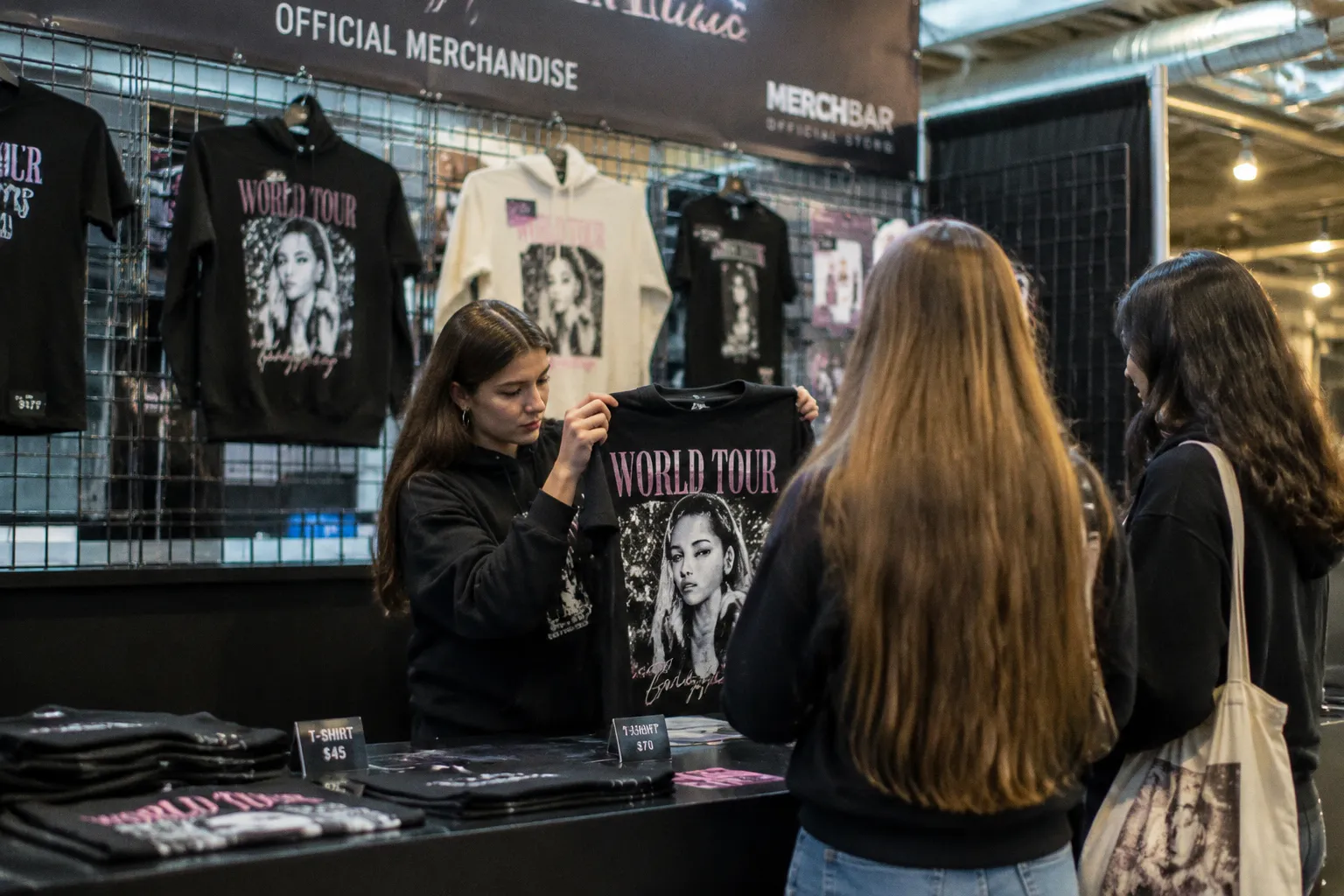
# Spotting the Real Thing: A Fan's Guide to Authentic Tour Merch
For the artists themselves, tour merchandise has evolved from a backstage afterthought into a curated extension of their creative world. When fans spend money on a piece of that world, they expect the craftsmanship to match the music. The indicators that distinguish genuine gear from imitation are concrete, and they begin with the smallest details.
Anatomy of an Official Tag
The tag stitched into the collar or the hem is the single most reliable place to start. Official tour merchandise almost always carries specific printed or woven tags that feature the artist's brand name, the year of production, and the legal copyright or licensing symbols that bind the item to its rightful owner.
A genuine tag will typically display the © symbol followed by the year and the name of the official merchandise provider. For major pop stars working through Universal Music Group's Bravado, for instance, that tag will identify Bravado as the licensed producer. Independent artists operating through their own labels will often carry their imprint's name alongside the © mark, with a year that matches the current tour cycle. The presence of both a registered trademark (®) and a copyright (©) on the same label, alongside the artist's touring year, is a strong indicator of authenticity.
There are honest exceptions to this rule. Some vintage tour items, particularly those from the late 1990s and early 2000s, were produced before standardized tagging became industry practice. Limited-run collaborations with smaller labels may also use simplified tags by design. The rule of thumb is consistency: an item's tag should match the era and the channel through which it was sold, and any tag that looks photocopied, misspelled, or printed on glossy paper instead of woven fabric should raise immediate questions.
Authentic tour merch is built to last — the tag is where that intention begins, and counterfeiters rarely invest in the labels the way the licensed producers do.
Screen Printing versus Low-Resolution Transfers
Once the tag checks out, the next stop is the graphic itself. Genuine pop star merchandise is overwhelmingly produced through screen printing, a method that lays ink directly onto the fabric in thin, durable layers. The result is a print that feels integrated with the shirt, smooth to the touch, and resistant to cracking even after dozens of washes. When you run a thumbnail across a real screen print, you feel the texture of the ink as part of the fabric, not a film sitting on top of it.
Counterfeit operations, working at speed and at lower cost, almost always substitute heat-pressed transfers or digitally printed graphics for the real thing. The difference is visible and tactile. Knock-off prints often feel rubbery, plasticky, or slightly raised above the surface of the fabric. They begin to peel, crack, or fade after only a few washes, sometimes after the first cycle through a machine dryer. The edges of the design may lift away from the shirt at stress points like the seams or where the print meets the collar.
A second giveaway is the resolution of the artwork itself. Counterfeiters frequently source their graphic files from social media posts, compressed tour photos, or low-resolution fan-shared images. When those files are blown up to the size of a hoodie or a tour poster, the result is a design that looks blurry, pixelated, or soft around the edges. Genuine artwork, by contrast, was created at high resolution by the artist's design team specifically for production at scale, and the lines stay clean no matter the size.
| Indicator | Authentic Screen Print | Counterfeit Transfer |
|---|---|---|
| Surface feel | Smooth, ink integrated with fabric | Rubbery, slightly raised film |
| Durability | Holds shape through repeated washing | Cracks, peels, or fades quickly |
| Edge definition | Crisp and clean | Soft, blurry, or pixelated |
| Color depth | Rich, layered ink | Flat, often with visible color banding |
| Source file | High-res artwork from design team | Compressed social media or fan image |
Authorized Distribution Channels
Where the merch is purchased is as important as how it is made. Authentic tour merchandise is sold through a deliberately narrow set of channels, and the size of that list is part of what keeps the official market tight.
The primary channel is the artist's official website, where tour drops are usually released in coordination with announcement dates and verified through the artist's social accounts. Beyond the artist's own platform, the major sanctioned retailers include Merchbar, which serves as a verified aggregator for many touring artists, and Bravado, the Universal Music Group merchandise arm that handles a large share of major pop and rock tours. Independent artists often run direct storefronts through Shopify or Bandcamp, both of which give the artist full control over the production and shipping chain. At the venue itself, the official merch booth will accept card and mobile payments, often with artist-specific branding on the point-of-sale system.
Anywhere outside that list, caution is warranted. Third-party sellers on large online marketplaces, pop-up stands near venue entrances, and resellers on secondhand platforms all carry elevated risk. A high price tag is not a guarantee of authenticity either — sophisticated counterfeit operations often price their goods within a few dollars of the official retail to appear legitimate. The most reliable verification is the channel itself: if it is not on the artist's verified list, the item should be treated as suspect.
Coverage of how the entertainment industry is responding to counterfeit merchandise — and the wider celebrity news cycle that surrounds it — can be found at celeb-post.net, which tracks global entertainment developments on a daily basis.
Red Flags in Design Clarity and Fabric Integrity
Beyond the tag and the print, the fabric itself tells a story. Genuine tour merch is typically produced in weight classes that match the garment type — a T-shirt in the 180 to 200 GSM range, a hoodie in the 300 to 400 GSM range, with cotton or cotton-blend compositions that feel substantial in the hand. Counterfeit operations tend to cut costs on the base fabric, producing shirts that feel thin, see-through, or rough at the seams.
Stitching is another quiet tell. Authentic merch is produced in factories that meet licensing standards, and the stitching is consistent, double-needled at stress points, and free of loose threads. Knock-offs often reveal themselves through uneven hems, exposed serging, or stitching that pulls away from the seam when the garment is gently stretched.
The placement and proportion of the graphic also matter. Official design teams lay out prints to sit correctly on the chest, the back, or the sleeve of a specific blank garment. Counterfeiters, working from screenshots, frequently misalign the design — a face sits too high on the chest, a logo is centered incorrectly, or the proportions look slightly off when compared to the official product photography on the artist's website.
For fans buying secondhand or through resale channels, the cleanest verification step is comparison. Pull up the artist's verified product page, look at the exact color, the exact placement, and the exact tag layout, and compare what is in hand to what is on screen. Discrepancies of even a few millimeters in print placement are a strong sign that the item is not what it claims to be.
A short verification routine for any secondhand or unfamiliar purchase:
- Check the tag. Look for ©, ®, the touring year, and the name of an authorized producer.
- Touch the graphic. A real screen print feels like part of the fabric, not a film on top.
- Inspect the resolution. Blurry or pixelated artwork is almost always sourced from a compressed image.
- Weigh the garment. Genuine tour tees and hoodies have weight to them; counterfeits often feel thin.
- Confirm the channel. If the seller is not on the artist's verified list, treat the piece as suspect.
The fabric, the stitching, and the proportions all carry the artist's intent — when any of those elements feel rushed, the piece usually is.
A Note on What Authentic Merch Really Means
There is a human story underneath the verification checklist. Tour merchandise has become one of the few physical artifacts of an artist's touring era, a thing fans hold onto long after the setlist fades from memory. For the artist, the design of each piece — the choice of blank, the typography, the placement of a single lyric — is part of how they introduce themselves to a room full of strangers. A counterfeit cuts that introduction short and replaces it with a quick imitation.
We have watched this part of the music industry mature across two decades. What began as a simple printed T-shirt sold from a merch table after the show has become a carefully produced extension of an artist's visual identity, with manufacturing partners, licensing deals, and release windows that fans now follow like tour dates. The verification process is part of respecting that evolution. A genuine piece of tour merch is a small but tangible record of where an artist was on a particular night, in a particular city, in a particular chapter of their work. Knowing how to recognize it is one way of honoring the craft that went into making it.