Drake Concert Tour Dates and the Future of Stadium Rap
The first thing to know is the one that matters at the box office: as of July 2026, there are no active, officially announced Drake concert tour dates. No live run is on sale as a confirmed world tour. No verified stadium itinerary has been released.
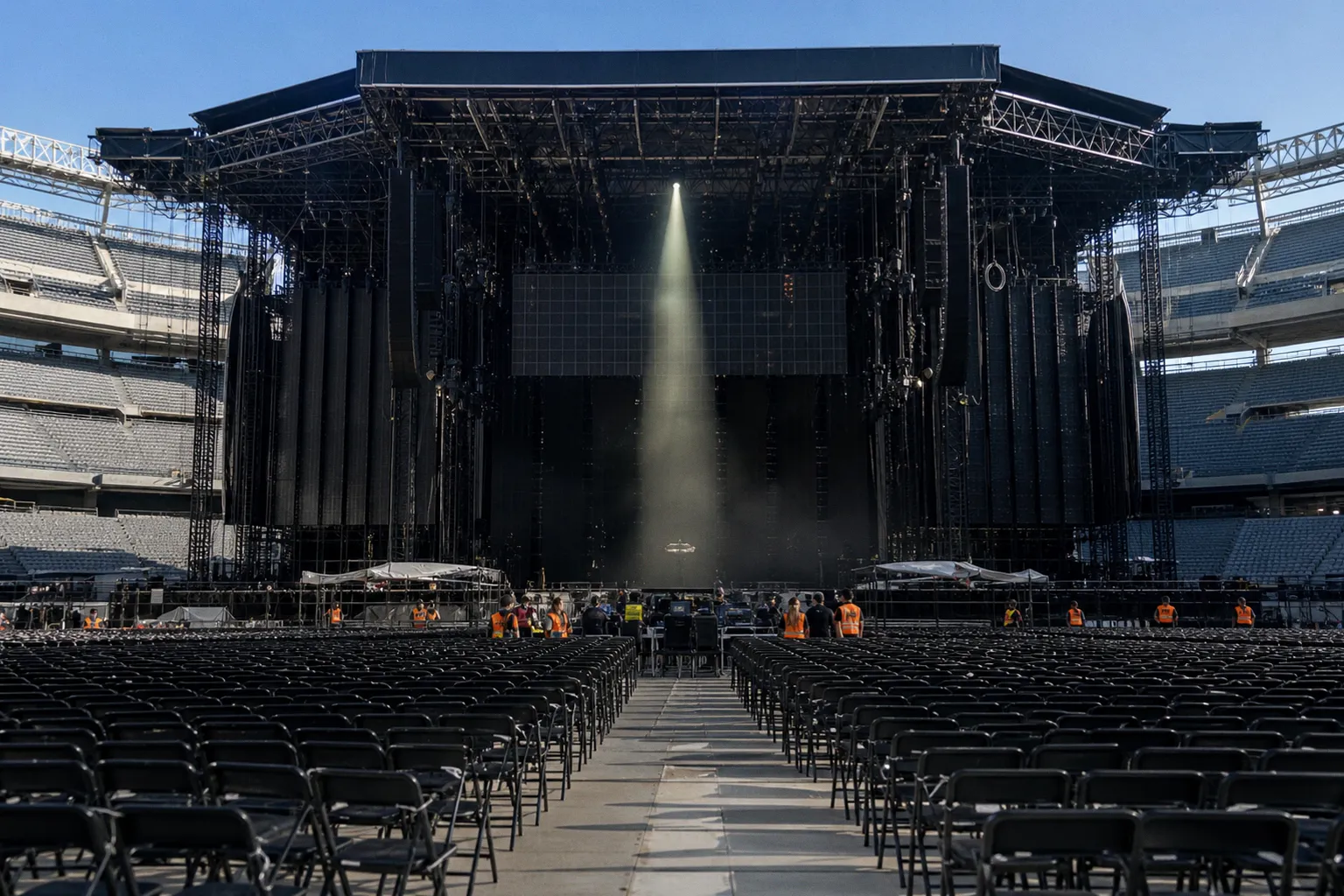
That silence is not small. Drake’s live operation is built for impact: bass that hits the ribs before the hook lands, LED walls big enough to turn the back row into a usable seat, and crowd control tight enough to hold an arena at full temperature for close to two hours. When an artist at that level steps off the road, the gap is felt not only by fans refreshing ticketing pages, but by promoters, venues, production crews, and the wider stadium rap economy waiting for the next signal.
The Post-Tour Landscape: Life After “It’s All A Blur”
“It’s All A Blur” was not just another tour title. It was Drake taking stock in public, with a set built around memory, dominance, catalog weight, and the strange physics of a rap superstar whose hits now span several eras of streaming life. The primary run occupied 2023 and 2024, with the “Big As The What?” extension pushing the cycle into early 2024 before it closed.
Since then, the question around the Drake tour schedule has become less about logistics and more about timing. Fans want a date. The industry wants a pattern. But the current status is clean: no active official tour dates.
That distinction matters. In the live business, rumors travel faster than trucks. A clipped arena map, a speculative festival poster, a resale listing with no source — all of it can look convincing when demand is hot. But a real tour begins in boring places: management confirmation, promoter announcement, venue calendars, primary ticketing pages, and press materials that line up. Until those pieces lock, there is no schedule.
For Drake, the absence of dates also leaves room to ask what the next road move would need to be. He is no longer an artist who can simply walk into a room, run the hits, and call it enough. The catalog is too large. The audience is too layered. Some fans want the early atmospheric cuts. Some want the arena-rap run. Some want the club records. Some are there for guest-spot gravity and spectacle. A new tour has to solve all of that while moving at the pace of a modern high-production rap show.
No Drake tour is active right now. The next announcement, when it comes, has to carry the weight of a whole live era, not just a list of dates.
That is the pressure point. A future Drake concert ticket will not be judged only by proximity to the stage. It will be judged by how the show uses scale.
What “It’s All A Blur” Clarified About Drake Live Performances
Drake’s live performances have always worked on contrast. He can stand still and let a chorus do the lifting. Then the room snaps into motion when the bassline opens up and the floor becomes a single moving surface. The best version of his show is not pure chaos. It is controlled pressure.
The “It’s All A Blur” cycle sharpened that. It leaned into atmosphere, pacing, and audience memory. The emotional cuts were not treated as dead zones between bangers; they were part of the engine. The crowd did not simply wait for the next detonation. It sang through the mist.
That matters for stadium rap because rap does not fill massive venues the same way rock or pop traditionally does. A rock band can stretch a guitar break across a field. A pop star can build a dance production around symmetry and costume movement. Rap has to work harder at scale. Breath control, vocal stamina, timing with backing tracks, and the ability to make a 60,000-capacity venue feel like a packed club are not automatic. They are design problems as much as performance problems.
Drake’s advantage has been the size and shape of his catalog. It gives a production team multiple temperature zones:
- The ignition records: tracks that open the pit instantly, heavy on bass and crowd response.
- The singalong records: hooks that let the audience carry whole sections, useful for pacing and vocal recovery.
- The atmospheric records: slower cuts that allow lighting, haze, and screen work to reset the room without killing momentum.
- The guest-driven records: songs that trigger recognition even when the guest is not physically present.
- The legacy records: older hits that land less like nostalgia and more like proof of endurance.
That kind of set is not just a playlist. It is a map of crowd energy. A headliner at this level cannot peak too early. In a 90-to-120-minute show, the first 20 minutes set trust, the middle stretch tests stamina, and the final run decides whether people walk out buzzing or merely satisfied.
I have watched large rap crowds turn restless when the pacing gets soft. Phones go up, then down. Chants scatter. The room starts checking itself. Drake’s strongest live architecture avoids that by stacking recognition quickly, then using texture — lighting, transitions, pauses, call-and-response — to keep the pulse alive.
Defining the Modern Stadium Rap Experience
Stadium rap is no longer just arena rap with more seats. The scale changes the show. A stadium with 40,000 to 80,000-plus attendees eats detail. Facial expressions vanish. Small gestures disappear. Even a loud record can feel strangely thin if the visual and low-end systems are not built to carry it to the upper deck.
That is why modern stadium rap depends on production that can punch across distance. Massive LED arrays are no longer decoration. They are part of the performance grammar. Projection mapping, kinetic stage elements, moving platforms, and heavy screen integration help convert a huge outdoor or domed venue into something readable from every angle.
For an artist like Drake, the next step is not simply “more screens.” That is the lazy version. The better question is how screens, staging, and sound can serve the emotional range of the catalog. A hard rap record needs impact: strobes, clean cuts, aggressive camera direction, low-end that does not blur into mud. A late-night R&B-leaning track needs space: darker lighting, slower motion, fewer distractions, a mix that lets the vocal sit closer.
The strongest stadium rap productions tend to solve four problems at once:
| Live challenge | What can go wrong | What a top-tier production does |
|---|---|---|
| Scale | The artist looks small from the upper tiers | Uses IMAG screens, vertical LED architecture, and camera direction that gives the back row a front-row read |
| Bass | Low end turns boomy and indistinct | Tunes the system for punch, not just volume, so kicks land cleanly across zones |
| Pacing | The set becomes a string of disconnected hits | Builds transitions that keep the crowd locked between eras and tempos |
| Sightlines | Floor staging blocks or favors only one section | Uses thrusts, moving elements, and screen reinforcement to spread attention around the venue |
The key is control. Stadium rap has to feel dangerous without actually becoming sloppy. Pyrotechnics can spike adrenaline, but they cannot fix dead pacing. A giant screen can magnify presence, but it cannot create charisma. Kinetic staging can move the eye, but it cannot replace vocal command.
Drake’s next tour, whenever announced, will be measured against that standard. The public will ask where he is playing. The live industry will ask what he is building.
The Economics Behind Drake Concert Tickets
The fan-facing part of a tour announcement is simple: dates, cities, venues, ticket links. Behind that, the economics are heavy. Major stadium-level rap tours can exceed $1 million per show in logistics and technical setup. That figure covers the kind of machinery most fans only see as a finished blast of light and sound: trucking, rigging, stage construction, video systems, audio deployment, crew movement, rehearsals, security coordination, and venue-specific adjustments.
That cost base helps explain why the Drake next tour question is not answered casually. A global run is not a weekend decision. The production has to travel. The routing has to make sense. Venues must be available. The show has to be technically repeatable without becoming visually stale. If the artist is going to move between arenas, stadiums, and festival fields, the design has to flex without falling apart.
Then comes ticketing. For major rap tours, primary sales are commonly handled through platforms such as Ticketmaster, with dynamic pricing often in play. That means prices can shift according to demand in real time. For fans, this has changed the emotional rhythm of buying tickets. The old anxiety was missing out. The new anxiety is watching the price move while deciding whether to commit.
There is also a difference between demand and access. Drake can generate enormous interest, but not all demand turns into a fair shot at a seat. Presales, queue systems, platinum pricing, VIP packages, and resale activity can make the first hour of availability feel like a stress test. That is now part of the stadium rap experience too: the show begins on the ticketing page, with fans staring at a spinning queue bar before they ever hear the first kick drum.
Still, the economics are not only about extraction. A high-cost show has to justify itself in the room. If the ticket price climbs, the production must carry the value. Better sightlines. Cleaner sound. Tighter transitions. Real stage ambition. A headliner at Drake’s level is judged not only on star power but on whether the money is visible and audible.
In stadium rap, spectacle is not a bonus feature. At these prices and capacities, it is part of the contract.
That is where future Drake concert tickets will face their sharpest test. Fans already know the songs. The question is whether the live format can make those songs feel newly physical.
Technology Is Pushing Hip-Hop Shows Into a New Phase
The next era of large-scale hip-hop will be won by artists who understand that technology is not the headline. It is the delivery system.
Massive LED screen arrays are now expected at the top tier. 3D projection mapping has become more common in large-format productions. Kinetic stage elements can change a room’s geometry mid-show. Cameras no longer simply document the performer; they shape the experience in real time. A close-up at the right moment can make a stadium feel intimate. A wide shot during a bass-heavy drop can make the crowd look like part of the set.
For Drake, this is especially relevant because his music often depends on mood as much as force. Some rap headliners can live in pure attack mode. Drake cannot, and should not. His live identity needs shadow, glow, pressure, and release. A future show could use technology not to bury him in spectacle, but to sharpen the different versions of Drake that audiences expect: rapper, singer, hitmaker, narrator, antagonist, hometown symbol, global pop operator.
The risk is overproduction. Stadium shows can become so saturated with visual noise that the artist turns into a moving logo. Rap suffers when the vocal feels secondary. If the mix is too track-heavy, the performance loses danger. If the screens are too busy, the words stop landing. If every song gets the same lighting assault, nothing feels big by the end.
The best live design understands negative space. A blackout can hit harder than a fire burst. One clean spotlight can do more than a wall of content. A stripped-down verse can reset a crowd better than another explosion. Drake’s catalog gives a designer those options, and that is why his next live chapter is genuinely consequential for stadium rap.
The likely frontier is integration: audio, visuals, staging, and crowd data working together without making the show feel automated. Not gimmicks for their own sake. No empty tech demo. The sweet spot is when the crowd feels the machinery but does not think about it. The bass lands. The screen breathes. The artist commands the center. The venue moves as one body.
What Fans Should Expect From Future Live Announcements
Until an official announcement arrives, the practical position is straightforward: treat all supposed Drake concert tour dates as unconfirmed unless they appear through verified channels. That means artist communications, management-backed releases, venue listings, recognized promoters, and primary ticketing platforms. Anything else is noise with a nice font.
When the next announcement does come, fans should expect speed. Major Drake dates will not sit quietly. Presale windows may open fast. Ticketing queues will likely be crowded. Pricing may move. Hotels around major venues can shift quickly. The live market has trained fans to act like analysts, and for an artist this large, that habit is not paranoia. It is survival.
A future Drake tour schedule would also likely be watched for venue type. Arenas offer control: tighter sound, clearer sightlines, easier atmosphere. Stadiums offer scale: bigger grosses, larger crowds, more visual ambition. Festivals offer cultural placement but less ownership of the room. Each format changes the show.
Here is the clean difference:
| Format | Strength | Trade-off |
|---|---|---|
| Arena run | Better control of sound, lighting, and intimacy | Fewer tickets per city and intense demand |
| Stadium run | Maximum scale and visual impact | Harder acoustics, bigger production risk, more pressure on pacing |
| Festival headline slot | Huge visibility and shared-event energy | Shorter set, less control over staging and audience composition |
This is why the next confirmed move matters. If Drake chooses arenas, it suggests precision and demand management. If he chooses stadiums, it signals a bid for maximum scale. If he chooses selective festivals, it may point to strategic appearances rather than a full touring cycle. None of that should be treated as fact before an announcement. But those are the live-business meanings fans will read into the decision.
The setlist question will be just as loud. A post-“It’s All A Blur” show cannot simply repeat the same emotional arc. It would need a reason to exist now. That could mean a new album cycle. It could mean a reworked catalog show. It could mean a more modular production that changes by city or region. The strongest version would avoid the museum effect. Drake has too many hits to perform them all in full, so the craft is in compression: medleys that do not feel rushed, transitions that make old records snap into new context, and enough live vocal presence to prove the night is not running on memory alone.
The Future of Stadium Rap Runs Through Pressure, Not Size Alone
The easy story is that rap has become big enough for stadiums. True, but incomplete. Size is only the visible part. The harder story is that stadium rap now has to meet the expectations of pop spectacle while keeping the physical voltage of hip-hop intact.
That balance is difficult. Too little production, and the show gets swallowed by the venue. Too much, and the artist disappears inside the machine. The next generation of stadium rap will be defined by performers who can stand in the middle of that machinery and still make the crowd feel addressed directly.
Drake is one of the central figures in that conversation because his live appeal sits at the intersection of scale and intimacy. He can turn a hook into a mass chant, then pull the room inward with a colder, moodier cut. He can use the audience as percussion. He can let recognition do the first hit, then rely on pacing to keep the second and third waves moving.
But the bar has moved. Fans have seen large screens. They have seen pyro. They have seen floating stages, moving rigs, and cinematic intros. The next Drake live chapter cannot win by being expensive alone. It has to be exact. The low end has to punch without smearing. The vocal has to cut. The transitions have to move like a nervous system. The back row has to feel included. The floor has to feel dangerous in the right way.
For now, the verdict is simple: there are no current Drake concert tour dates to buy as an officially announced world tour. The waiting is real, but the blank calendar is not a mystery to fill with rumor. It is the pause after a major cycle and before the next live argument.
When Drake returns to the road, the question will not be whether he can draw a crowd. That has been answered. The question will be whether he can define the next pressure point for stadium rap: bigger rooms, sharper sound, heavier visuals, and a show that still feels human when 80,000 people are shouting the same line back at him.